
In modern multi-domain intelligence operations, relying on a single intelligence layer creates critical vulnerabilities. Optical sensors are limited by smoke, haze and darkness, radar imagery can struggle to tell materials apart, and Signals Intelligence (SIGINT) can be defeated by radio silence. Pairing Radio Frequency (RF) SIGINT with Short-Wave Infrared (SWIR) Earth observation creates a multi-layered approach in which each layer covers the blind spots of the other.
The Limitations of Single-Layer Intelligence
Every sensor operates within distinct physical limits, leaving inherent operational blind spots:
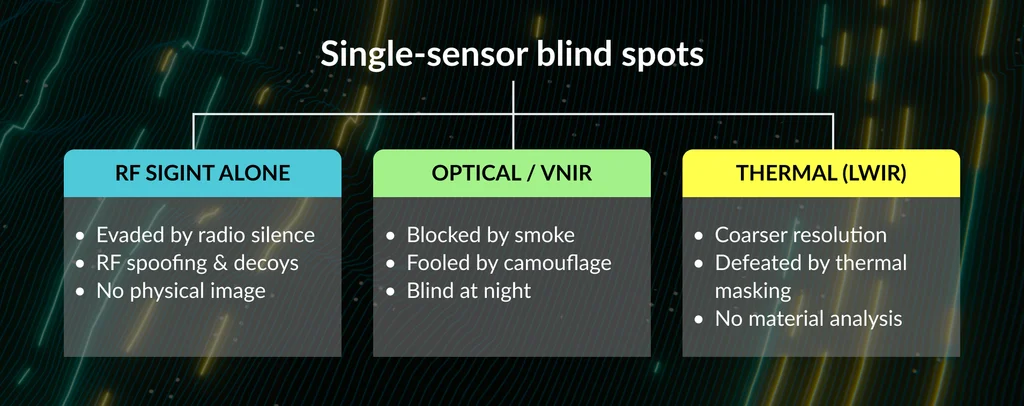
When adversaries practise strict emissions control (EMCON), RF SIGINT loses the signal. When assets are hidden under smoke, haze or synthetic camouflage, optical cameras struggle. Sensor fusion bridges these gaps by cross-referencing where electromagnetic emissions occur with what the physical material on the ground actually is.
The Synergy of RF SIGINT and SWIR
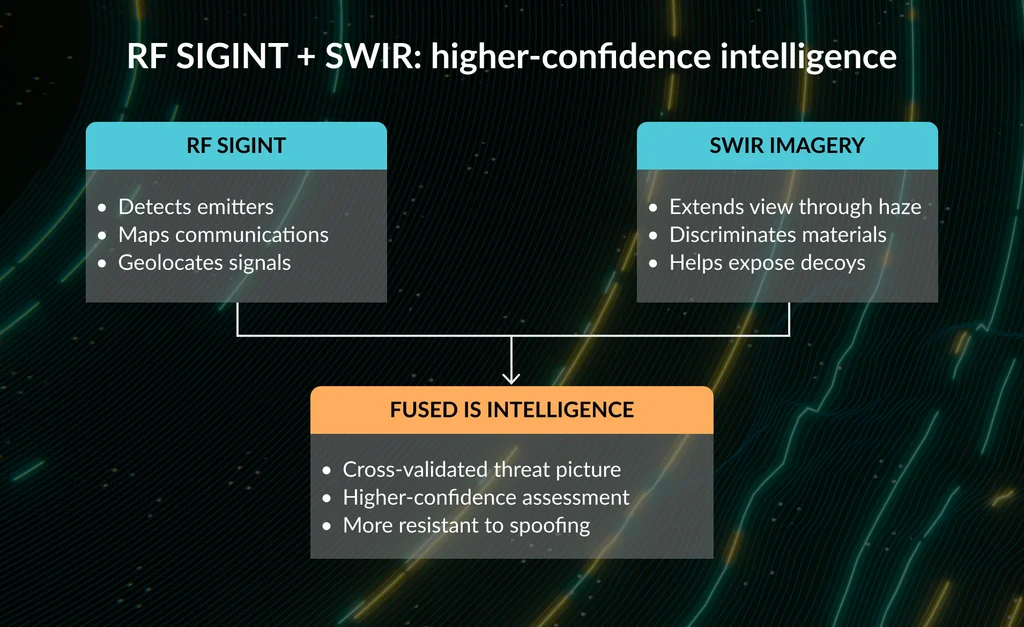
RF SIGINT passively captures electronic emissions, such as radio communications, selected satellite links and jammer activity, helping to show where an adversary is transmitting. SWIR captures reflected light in the 1.0 to 1.75 micron range, responding to material composition and moisture rather than visual appearance, and helping to confirm what is physically present. Because SWIR relies on reflected sunlight, it is a daytime layer; radar and thermal sensors complement it after dark.
1. Defeating RF Spoofing and Decoys
Adversaries may place transmitters on empty terrain or beside dummy equipment to simulate command posts or air defence units.
● The Fusion Solution: RF SIGINT detects and geolocates the emitter and flags the site. SWIR imagery of the location is then tasked, and material signatures help analysts judge whether what is on the ground is consistent with real equipment or with a decoy.
2. Countering Emission Control (EMCON)
High-value mobile assets, such as launchers or command posts, routinely switch off their emitters to evade SIGINT detection.
● The Fusion Solution: When an emitter goes quiet, the RF track goes cold. SWIR can still reveal physical indicators that radio silence does not hide, such as compacted ground, disturbed soil and moisture changes, helping analysts narrow the search area and pick up activity again at the next revisit.
3. Seeing Through Camouflage and Atmospheric Cover
Camouflaged radar sites and command positions are often hidden beneath foliage or netting, or operate under hazy conditions.
● The Fusion Solution: While RF SIGINT picks up transmissions associated with the site, SWIR’s reduced sensitivity to haze and thin smoke extends the collection window, and its sensitivity to material properties helps distinguish living vegetation from synthetic camouflage netting.
Real-World Operational Scenarios
Maritime Domain Awareness
Dark vessels frequently switch off or spoof their Automatic Identification System (AIS) transponders to avoid tracking. RF SIGINT can detect and geolocate vessel radio emissions and flag mismatches with AIS reporting, and radar can confirm presence. SWIR then adds surface-level confirmation, including wake signatures and movement patterns, in coastal mist and haze where optical imagery degrades. Together, the layers support attribution and pattern-of-life analysis.
Air Defence Network Mapping
Integrated air defence systems rely on mobile radars that relocate frequently. Where tailored collection supports it, RF SIGINT can indicate active emitter locations, while SWIR provides material and surface context around candidate sites, such as ground disturbance, vehicle tracks and infrastructure change over time.
Fusing SWIR and SIGINT at Scale
Combining RF SIGINT and SWIR reduces reliance on any single source and raises confidence in intelligence assessments. Pairing electronic signal collection with material discrimination helps defence teams verify what they detect before they act on it. LC60 is developing SWIRSAT, a SWIR satellite constellation designed for multi-sensor integration, with the first two satellites planned for launch in early 2027. Combined with partner-sourced space-based RF collection and sovereign data and processing options, it gives defence and security organisations multi-source, decision-ready intelligence.